Language fundamentals
If you want to understand what’s actually happening underneath the abstractions you use every day, start with The C Programming Language by Brian Kernighan and Dennis Ritchie and The Pragmatic Programmer by Andrew Hunt and David Thomas. The first one was written by the people who invented the C language itself, and reading it is close to a rite of passage: short, dense, and every sentence earns its place. The Pragmatic Programmer takes a different angle: rather than teaching a language, it teaches the habits. Hunt & Thomas don’t dwell on languages, preferring to dive directly into DRY, orthogonality and tracer bullets… Habits that separate programmers who ship reliable software from those who don’t. Read one as a junior dev and it’ll click. Re-read it a few years later and you’ll realize you understand it on a completely different level.
Systems and infrastructure
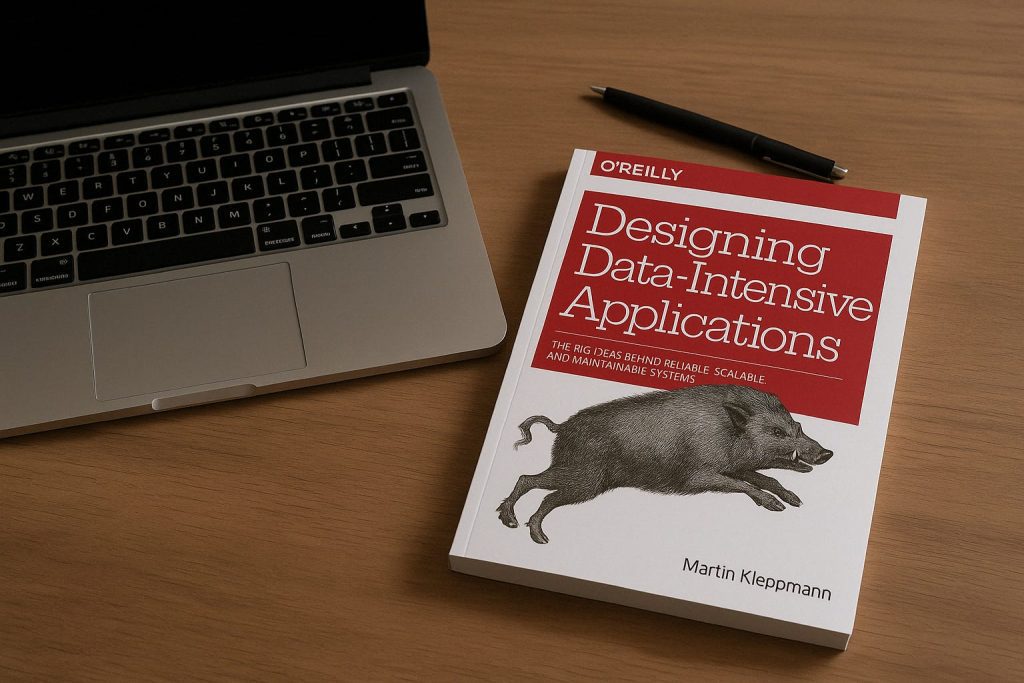
For anyone wanting to learn more about building or maintaining backend systems, Designing Data-Intensive Applications by Martin Kleppmann and Database Internals by Alex Petrov are practically a matched pair. Kleppmann’s book will change how you think about databases, caching, replication, and distributed systems in general, and Petrov’s book is the natural next step: Kleppmann gives you the big picture, Database Internals takes you underneath the hood. Together they cover the full range from “why does this architecture work?” to “what is my database actually doing when I hit commit?”
If you want the deepest possible foundation, The Art of Computer Programming, Vol. 1 by Donald Knuth is the closest thing computer science has to a foundational text. While it is quite mathematical and painstaking (nobody actually reads it from front to back), people still expand on it decades after it initially came out.
Security
For those of you who have an interest in cybersecurity, The Shellcoder’s Handbook is another of our staff’s favorites. Far from staying theoretical, this book walks you through how real vulnerabilities are found and exploited across multiple platforms and architectures. It has a reputation for being genuinely tough going, but working through it sharpens your instinct for how software actually breaks, which, incidentally, is also how you learn to build things that don’t (42 pedagogy *wink wink*).
Product and business thinking
Interested in learning more about product design and management? Then you’ll want Inspired: How to Create Tech Products Customers Love by Marty Cagan, Hooked: How to Build Habit-Forming Products by Nir Eyal, and Rework by Jason Fried and David Heinemeier Hansson. Cagan’s book is technically written for product managers, but it’s just as useful for engineers who want to understand why teams build things the way they do. Eyal’s Hooked is shorter and sharper: it breaks down why certain products become habits almost without you noticing, through a repeatable trigger-action-reward framework that shows up constantly in product discussions. A must-read to both understand the technique and to think critically about the ethics of using it. Rework, from the founders of 37signals (the team behind Basecamp and Ruby on Rails), is the odd one out in the best way: short, opinionated, and allergic to conventional startup wisdom, arguing for building small and shipping fast instead of grinding. Whether or not you agree with every chapter, it makes you question assumptions you didn’t know you had.

Last but not least, one for perspective
Alan Turing: The Enigma by Andrew Hodges doesn’t fit neatly into a technical category, but it’s a staff favorite for a reason. It’s the biography that inspired The Imitation Game, and a far richer story than any film could tell. It comes as a reminder that computer science is a young field, built by real people wrestling with real, high-stakes problems. It’s also just a gripping read about one of the most consequential minds of the 20th century.
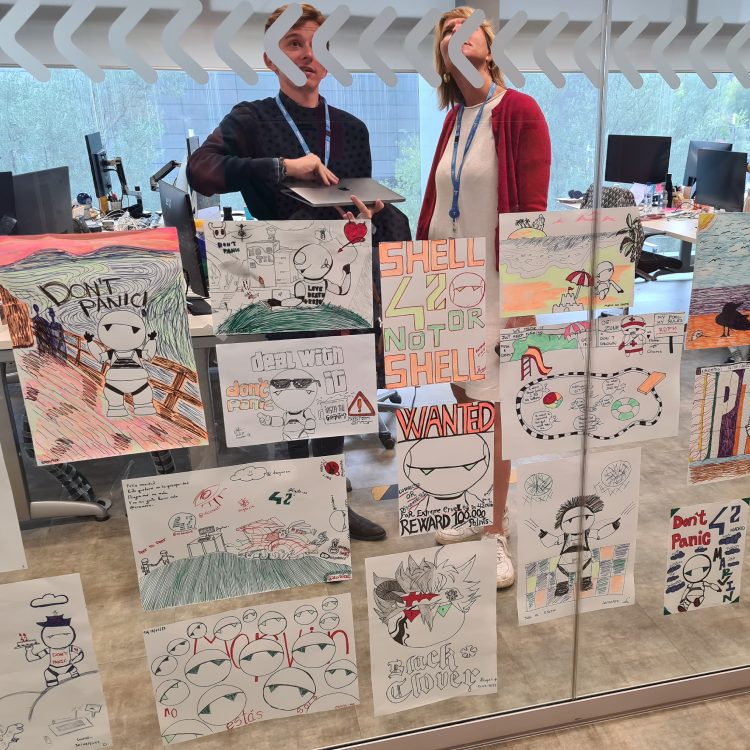
And of course, if you haven’t done so already, you should most definitely read Douglas Adams’ Hitchhikers’ Guide to the Galaxy!
That’s it for now folks, we’ll be back with more if you like formats like these